Lost Signals · Jul 2026
Nine Hundred Years, Then Fifteen
The BBC Domesday Project, 1986
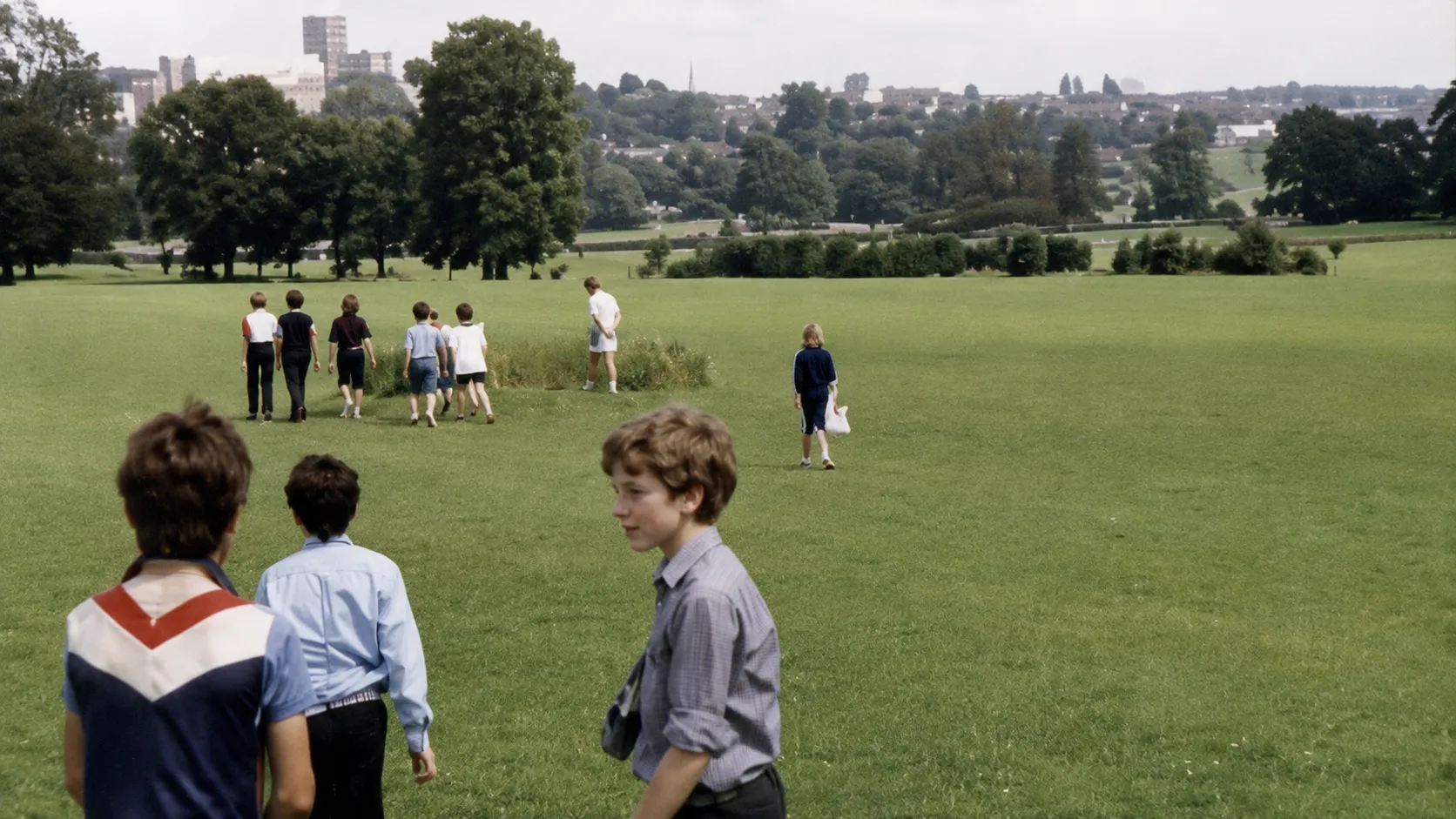
In 1986, to mark nine hundred years since the Domesday Book, the BBC decided to make another one.
The BBC Domesday Project ran with Acorn, Philips and Logica, with some money from the European Commission. Over a million people contributed, most of them schoolchildren, from around nine thousand schools. The country was divided into blocks four kilometres by three on the Ordnance Survey grid, and children walked their block and wrote it down: what the shops sold, what their parents did, what the estate was like, what they thought of it.
The result was 147,819 pages of writing and 23,225 photographs on one disc, with national statistics, maps and film on a second. It was published on LaserDisc, played through a BBC Master with a Philips videodisc player, and the whole rig cost over five thousand pounds, which is why almost the only places that had one were schools and libraries.
Within about fifteen years it could not be read.
Not because the discs rotted. Because the format was proprietary and the hardware stopped existing. The still images had been stored as single frames of analogue video with the computer’s interface drawn over the top — a design that predated JPEG and colour video cards, and that made no sense to any later machine. The software had no export function. The data was not encrypted or lost. It was simply sealed inside a system nobody manufactured any more.
An Observer piece in March 2002 made the comparison that everyone has made since. The 1086 Domesday Book, on parchment, is at Kew and is perfectly legible. The 1986 one, sixteen years old, was unreadable.
It was got out in the end, though not easily. The CAMiLEON project at Leeds and Michigan spent three years emulating the BBC Master and the disc player in software and pulled the raw content off — something like seventy gigabytes a side. Another team found the original one-inch videotape masters. The BBC put a version online in 2011.
The bit I keep returning to is what the children were asked to do. Write down what your street is like, for people in a thousand years.
They did it properly. Then the medium chosen to carry it a thousand years failed inside a single childhood, and had to be rescued by people emulating a computer that had been in the same room as them.
Sources
- Wikipedia, BBC Domesday Project and BBC Domesday Reloaded — partners (Acorn, Philips, Logica, ESPRIT funding), disc structure, contributor numbers
- Grokipedia, BBC Domesday Project — 147,819 pages and 23,225 photographs on the Community Disc; D-blocks of 4km x 3km; edited by Peter Armstrong
- CAMiLEON project (Universities of Leeds and Michigan, funded 1999–2002) — DomesEm emulation; c.70GB raw extraction per disc side
- Observer, 3 March 2002 — the article that publicised the obsolescence problem
- The Domesday86 Project — LaserDisc digitiser and BBC Master emulation
- National Museum of Computing, Bletchley Park — working Domesday system