Under Glass · Jan 2025
Birth of a Penguin
Allen Lane found nothing to read at a station, and fixed it
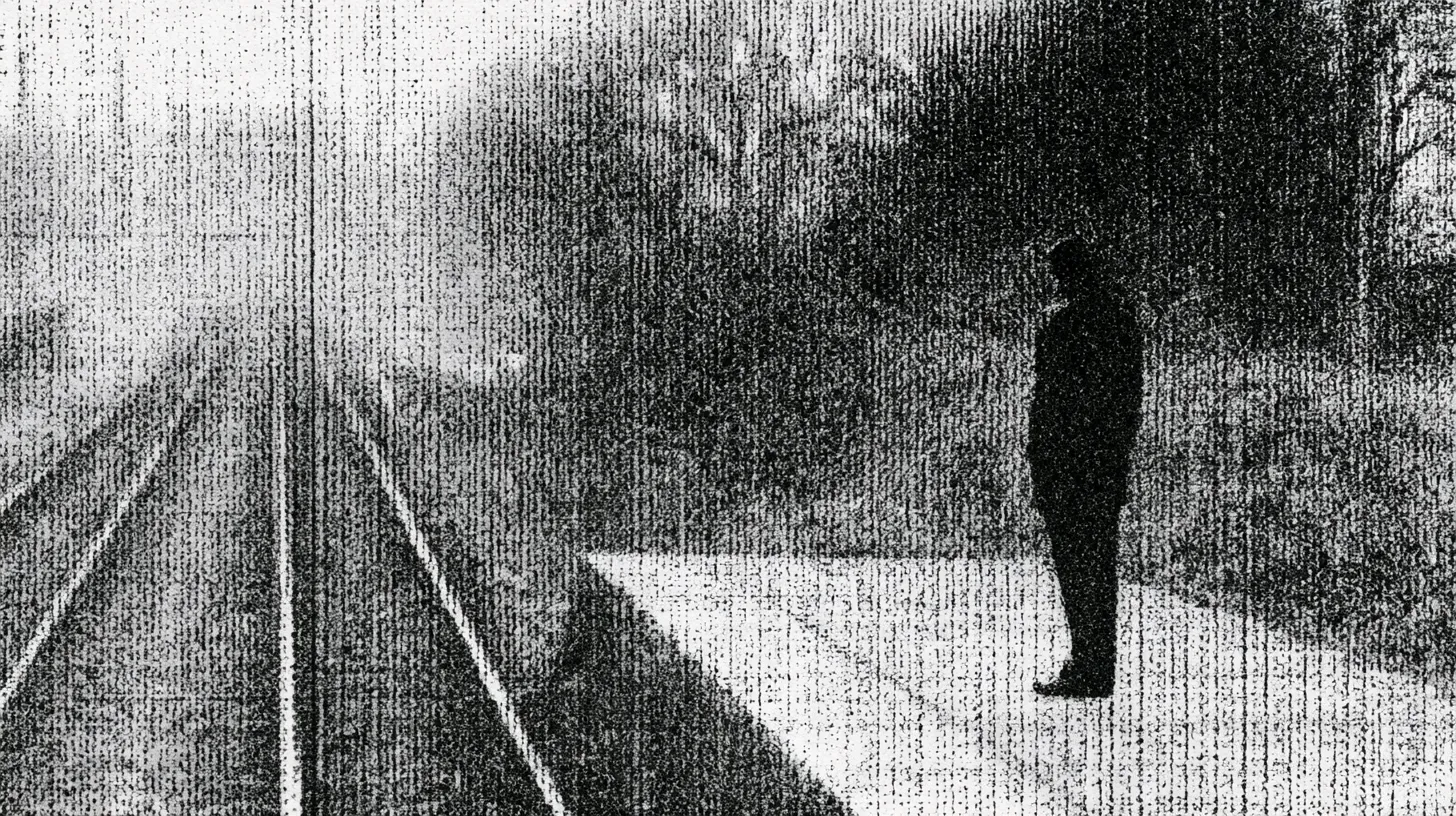
In 1934, Allen Lane spent a weekend at Agatha Christie’s house in Devon and then stood on the platform at Exeter St Davids waiting for a train, with nothing to read.
What was available at a station bookstall was magazines, and reprints of Victorian novels, and pulp. If you wanted a serious contemporary book you bought it in hardback from a bookshop at seven and sixpence or more, which was a considerable sum, and there were not many bookshops.
Lane thought there was no reason a good book had to be an expensive object.
The proposition
The idea was not the paperback. Paperbacks existed. Continental publishers had been doing cheap softcovers for years and Britain had a large trade in cheap reprints.
The idea was quality at that price. Contemporary literature, serious non-fiction, current authors, properly typeset, sold for sixpence — the price of a packet of cigarettes — through outlets that were not bookshops.
The trade thought he was mad, and said so with some vigour. Booksellers objected that sixpence could not sustain a margin. Publishers objected that it would destroy the hardback market and devalue their authors. Lane’s own board at The Bodley Head refused to back it and he launched it partly at his own risk.
The first ten titles went out on 30 July 1935: Maurois, Hemingway, Christie, Dorothy L. Sayers, Compton Mackenzie and others. Reprint rights, mostly, bought cheap because nobody expected anything.
Woolworths
It nearly failed at the first hurdle, and the thing that saved it was a chain store.
The arithmetic of sixpence only works at volume, and the initial subscription from the book trade was not close to enough. The story — and it is a good one, if slightly polished in the retelling — is that a buyer at Woolworths was unpersuaded until his wife happened to be in the office, looked at the books, and said she would buy them.
Woolworths took an order in the tens of thousands, commonly given as around sixty-three and a half thousand copies, and that made the first list viable.
Penguin was not sold in bookshops to book buyers but in a chain store, next to the hardware, to people buying other things, at a price that required no deliberation.
The grid
Edward Young, who was twenty-one and working in the office, designed the cover and drew the bird. He is supposed to have gone to London Zoo to sketch penguins, and to have remarked afterwards on the smell.
The design is three horizontal bands: colour, white, colour. Title and author in the white centre band, in Gill Sans. The bird in a white oval at the foot.
And the colour was information. Orange meant fiction. Green meant crime. Dark blue was biography, cerise travel, red drama. A customer at a Woolworths counter could see across the display what kind of book each one was without reading a word.
That is a piece of design thinking well ahead of its period — not decoration, not illustration, but a system, applied consistently across a list, that does a job at a distance. It has been imitated continuously for ninety years.
There were no pictures on the covers for a long time, partly on principle and largely from economy.
What it did
Pelican followed in 1937 for non-fiction: cheap, serious, current books on economics, science, psychology and politics, sold to people who had left school at fourteen. Penguin Specials covered the crisis in Europe almost in real time.
And in 1960 Penguin published the unexpurgated Lady Chatterley’s Lover and was prosecuted for obscenity, in a trial the prosecution lost after asking the jury whether this was a book they would wish their wives or servants to read.
Sources
- Penguin Books founded 1935 by Allen Lane at The Bodley Head; the origin story of finding nothing worth reading at Exeter St Davids station after visiting Agatha Christie at Greenway
- First ten titles published 30 July 1935 at sixpence, including Ariel by André Maurois and The Mysterious Affair at Styles by Agatha Christie
- Edward Young designed the horizontal three-band cover grid and drew the penguin colophon, reportedly after sketching at London Zoo; colour-coded by genre — orange fiction, green crime, dark blue biography, cerise travel
- The order from Woolworths — commonly reported as around 63,500 copies — made the first list commercially viable
- R v Penguin Books Ltd, Old Bailey, 1960 — the Lady Chatterley's Lover prosecution under the Obscene Publications Act 1959, and Mervyn Griffith-Jones's question to the jury about wives and servants