Folk Ways · Apr 2025
Two Streams, a Mile Apart
Hallaton against Medbourne, Easter Monday, with hare pie first
On Easter Monday, in a Leicestershire village, a pie is blessed, a piece of it is thrown to a crowd on a hill, and then several hundred people spend the afternoon trying to carry a small barrel of beer across a stream.
The pie
The hare pie is made, taken in procession, blessed by the rector, and distributed. A portion is carried up to a spot outside the village called Hare Pie Bank, and scattered.
The scramble for it is the first event of the day, and it is mostly ceremonial now, though people still go for it.
The custom is traced to a bequest: land left to the rector of Hallaton on condition that he provide, every year, hare pie, ale and bread for the parish. The story attached is that two women crossing a field were charged by a bull, and were saved when a hare ran across its path and drew it off.
Whether any of that is true is unestablished. The obligation on the rector, however, made the custom hard to stop, and the nineteenth century contains at least one incumbent who tried and was firmly told otherwise.
The bottles
Then the bottle kicking, which involves no bottles and very little kicking.
The three objects contested are small wooden casks bound with iron. Two contain beer. The third is solid — the dummy bottle — and is played first.
The two sides are Hallaton and Medbourne, the next village along. There is no team in any formal sense. Anybody who turns up may join in, on whichever side they claim, and the numbers on the day run into the hundreds.
The goals are two streams, roughly a mile apart, one on each side of Hare Pie Bank. To score, a bottle must be got across your side’s stream.
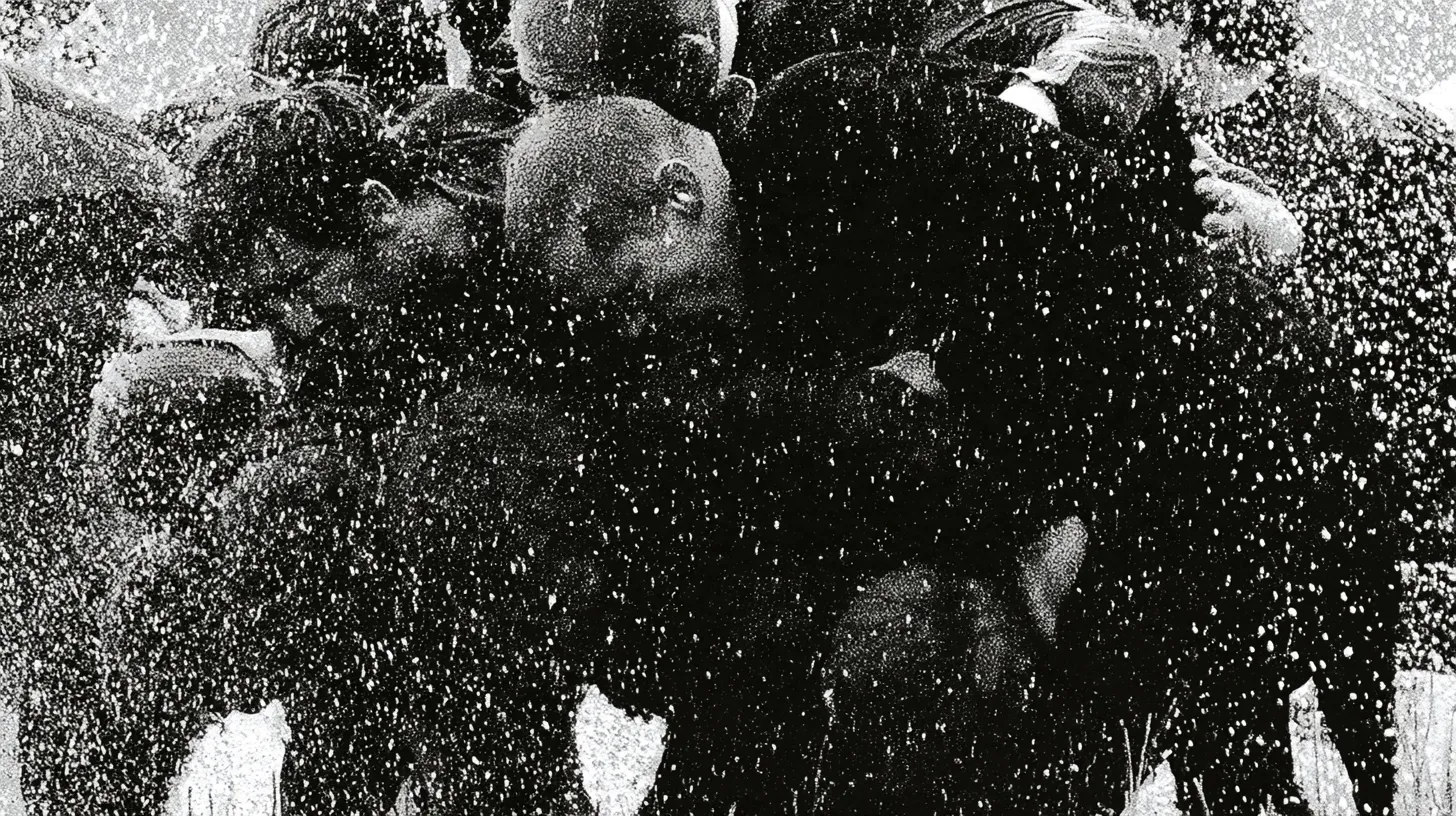
The rules, in their entirety, amount to: no weapons, no eye-gouging, and the bottle must go over the stream. Everything else is permitted, including carrying, throwing, burying, hiding, and moving the whole scrum bodily across a field over a period of hours.
Best of three. It routinely takes the whole afternoon.
What it actually is
It belongs to a family of English games that survive in a handful of places — Ashbourne’s Royal Shrovetide football, the Hallaton bottles, the Haxey Hood — and which share a specific structure.
An object. Two goals a long way apart. No teams, no numbers, no time limit, and the entire able-bodied population of two settlements on opposite sides.
These were once everywhere. Almost every English town had a mass football or a similar contest, and they were suppressed in enormous numbers through the nineteenth century — by magistrates, by police, by clergy and by the Highways Act, on grounds of public order, property damage and the increasing incompatibility of a thousand-person scrum with a street full of plate glass.
The ones that survive did so mostly because they were rural enough to have somewhere to go. Hallaton’s contest happens in fields between two villages rather than in a high street, which is why it was still possible in 1900 when the urban versions were not.
Afterwards
The winning side takes the bottles back to the village and the beer is drunk from them at the Butter Cross, shared out to anybody standing there, including the losers.
Sources
- Hallaton, Leicestershire, holds the Hare Pie Scramble and Bottle Kicking each Easter Monday, contested against the neighbouring village of Medbourne
- A hare pie is blessed and distributed at the rectory, then part of it is scattered on Hare Pie Bank for the scramble before the main contest begins
- Three 'bottles' — small iron-banded wooden casks, two filled with beer and one solid dummy known as the dummy bottle — are contested in turn; the first side to take two wins
- The goals are two streams roughly a mile apart on either side of Hare Pie Bank; there are no teams as such, no limit on numbers, and effectively no rules beyond prohibitions on weapons and eye-gouging
- The custom is traditionally traced to a bequest to the rector conditional on providing hare pie, ale and bread annually, associated with a legend of two women saved from a bull by a hare