Folk Ways · Sep 2025
Eighteen Suspects
Roman Britain's surviving letters are mostly about stolen clothes
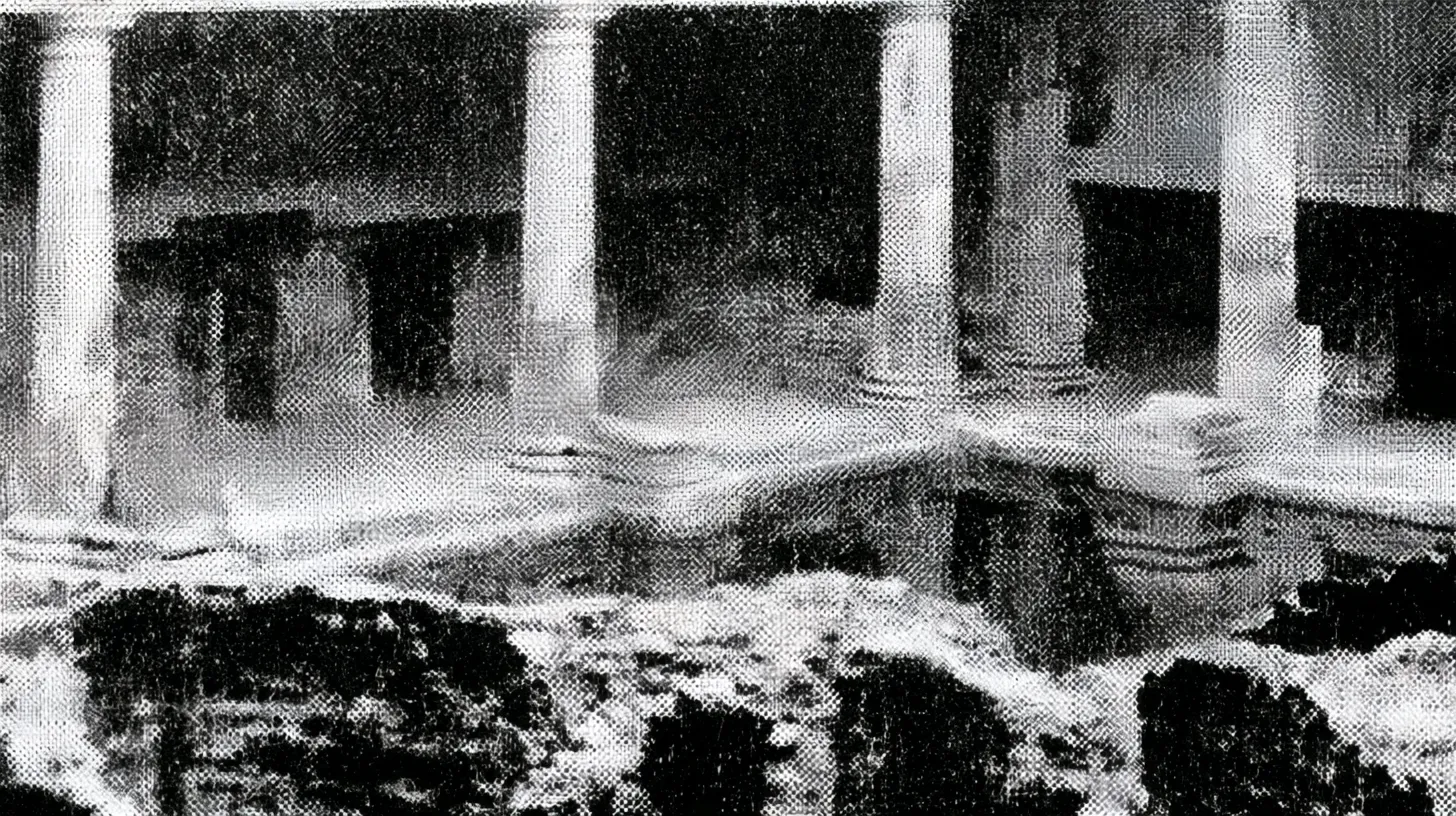
In 1979 and 1980, archaeologists digging the Sacred Spring at Bath — the hot spring under the King’s Bath, where the Romans built the temple of Sulis Minerva — pulled out more than a hundred and thirty small sheets of lead and pewter.
People had thrown them into the water between the second and the fourth centuries. They are covered in handwriting.
This is, by a very long way, the largest body of writing by ordinary people that survives from Roman Britain. Almost all of it is about theft from the changing rooms.
What they say
The form is a legal one. The writer hands the case over to the goddess — literally assigns the stolen property to her, so that the thief is now stealing from Sulis rather than from a private individual — and asks her to deal with it.
Docimedis lost two gloves and asked that whoever took them should lose their mind and their eyes in the goddess’s temple. Somebody else, robbed of a hooded cloak, specified that the thief should not be allowed to buy the gift back except with his own blood.
The commonest complaint by far is clothing. You went to the baths, you undressed, you got in, and while you were in the water someone walked off with your tunic. There was no realistic prospect of the authorities finding them. So you went to the temple, and you wrote it down, and you gave the problem to a goddess.
The best of them is a man called Annianus, who lost six silver coins from his purse. He was not certain who had done it. So he wrote out the standard formula — whoever it was, man or woman, slave or free — and then, at the bottom, he listed everybody he suspected.
There are eighteen names on it.
How they were made
The writing is British Latin: the ordinary spoken language of the province, with its spellings and its slips, which is precisely why linguists value the collection.
Some tablets were written backwards, mirror-reversed, to make the curse work harder. Some were pierced through with a nail. Most were rolled or folded before being dropped in the spring, so that only the goddess would read them.
Annianus’s tablet covers all possibilities and includes the phrase whether pagan or Christian, which makes it one of the earliest documentary traces of Christianity in Britain — appearing, of all places, in a pagan curse, as a category of person who might have nicked your money.
What they are for
Nothing sacred at all, in the sense we usually mean.
This is what people actually did with religion. Not cosmology, not salvation — small claims. A goddess with a large temple and a hot spring, functioning as the last available court for an inhabitant of a provincial town whose gloves had gone.
They went in the UNESCO Memory of the World register in 2014, on the strength of being the only surviving evidence of what ordinary Britons were thinking about.
They were thinking about their coat.
Sources
- R. S. O. Tomlin, Tabellae Sulis: Roman Inscribed Tablets of Tin and Lead from the Sacred Spring at Bath (Oxford University Committee for Archaeology, 1988), and Voices from the Sacred Spring (Millstream, 1992)
- Over 130 tablets recovered from the Sacred Spring under the King's Bath during Cunliffe and Davenport's excavations, principally 1979–80; dated 2nd to late 4th century AD
- UNESCO, 'Bath's Roman curse tablets added to the Memory of the World Register' (2014) — lead and pewter sheets, Old and New Roman Cursive, some written back to front or pierced with nails to increase potency
- Tabellae Sulis 98 (Annianus and the six silver coins, with eighteen named suspects); Tomlin 1988, 114–15 (Docimedis and the two gloves)